
One of the most exciting milestones in a baby’s development is learning to walk. Many parents begin to wonder when their baby will take those first independent steps.
While every baby develops at their own pace, most babies begin walking between 9 and 15 months. Some may start earlier, while others take a little longer as they build strength and confidence.
Understanding the signs that your baby is ready to walk can help you support this important stage of development.
Early Signs Your Baby Is Getting Ready to Walk
Before babies take their first steps, they go through several stages of development that prepare them for walking.
Some common signs your baby may soon start walking include:
- Pulling themselves up to stand using furniture
- Cruising along furniture while holding on
- Standing independently for a few seconds
- Showing interest in exploring and moving around
These milestones help babies build balance, coordination and muscle strength.
How Babies Learn to Walk
Learning to walk takes time and practice. Babies usually move through several stages before walking independently.
Crawling
Many babies begin by crawling or shuffling around the floor, which helps strengthen their arms and legs.
Pulling Up
Babies often pull themselves up using furniture such as sofas or coffee tables.
Cruising
Cruising happens when babies move sideways while holding onto furniture. This helps them learn balance and coordination.
First Independent Steps
Eventually babies gain the confidence to take their first steps without holding on.
How Parents Can Encourage Walking
There are a few simple ways parents can support babies as they learn to walk.
Give Them Plenty of Floor Time
Allowing babies to move freely on the floor helps them build strength and coordination.
Encourage Standing and Cruising
Place toys on furniture to encourage babies to pull themselves up and explore.
Offer Support Without Holding Too Much
While it’s natural to want to help, giving babies space to practice balancing helps them gain confidence.
Do Babies Need Shoes When Learning to Walk?
When babies are learning to walk indoors, going barefoot is often best because it allows them to feel the ground and develop balance.
However, when walking outdoors or on harder surfaces, lightweight flexible shoes can help protect little feet.
Shoes designed for first walkers should be:
- flexible
- lightweight
- breathable
- supportive without restricting movement
Why Many Parents Choose Sock Shoes for First Walkers
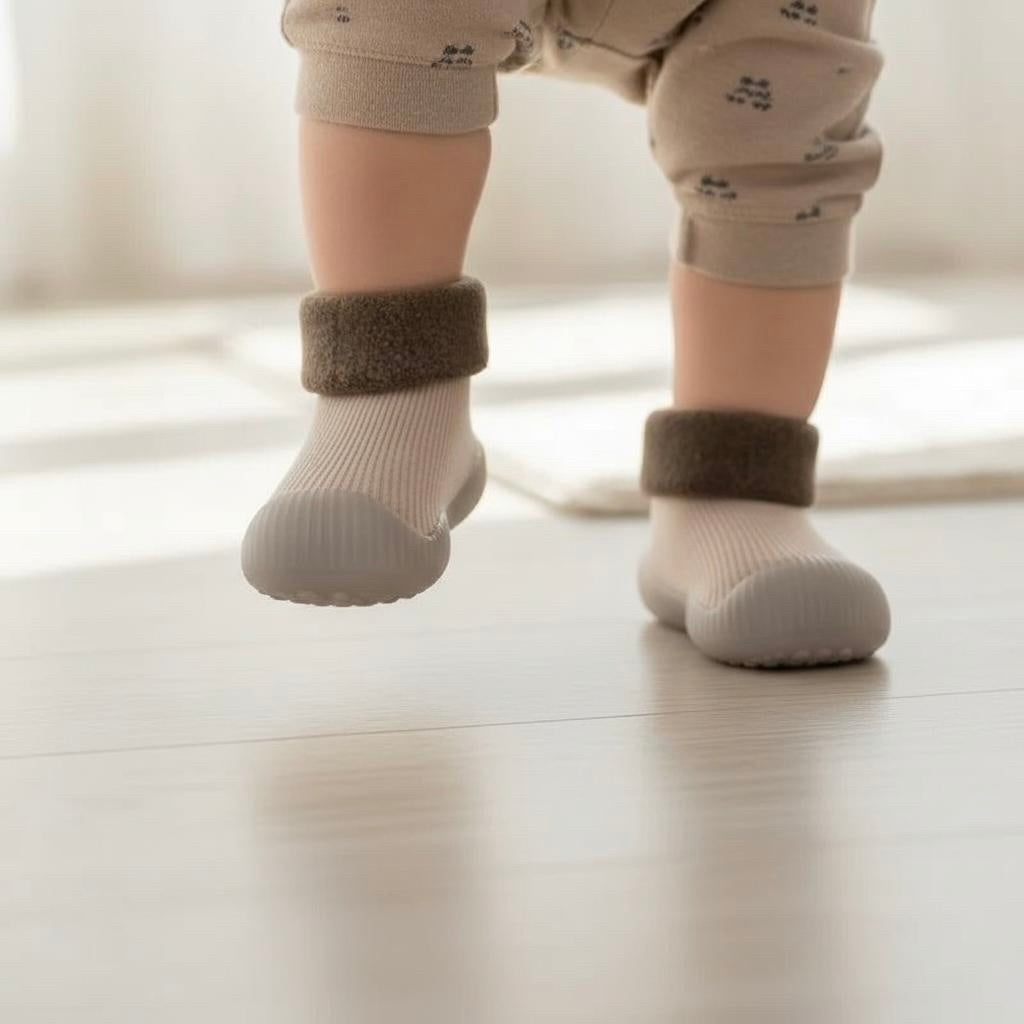
Sock shoes have become a popular choice for babies learning to walk because they combine the comfort of socks with the protection of soft shoes.
They are designed to allow natural movement while providing grip to help prevent slipping on smooth surfaces.
Soft flexible soles help toddlers maintain balance while still protecting their feet during play and exploration.
Supporting Your Baby’s First Steps
Every baby learns to walk at their own pace, so it’s important to be patient and encouraging during this exciting stage.
Providing a safe environment, plenty of practice and supportive footwear when needed can help babies gain the confidence they need to take their first steps.
If you're looking for flexible first walker shoes, our Baby Sock Shoes – Non-Slip First Walker Shoes for Toddlers are designed to support little ones as they begin their walking journey.

Leave a comment
This site is protected by hCaptcha and the hCaptcha Privacy Policy and Terms of Service apply.